After the Last Note Fades: Mental Health and the Hidden Cost of Making Music in Vietnamese America
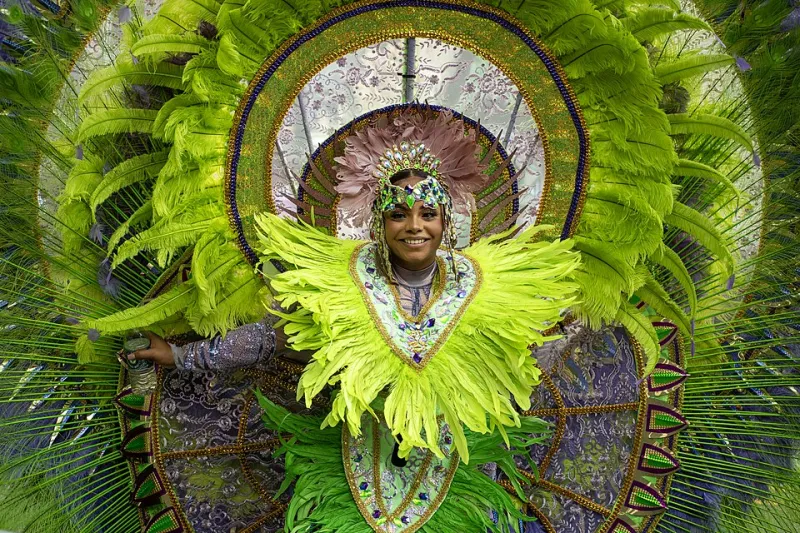
Photo: Theklan, CC BY-SA 4.0, via Wikimedia Commons
The ballad ends. The applause comes. The artist smiles and takes a bow. And then, later — sometimes much later, alone in a car in a parking lot or staring at a ceiling at 2 a.m. — the weight of it all settles in.
This is a story that doesn't get told often enough inside Vietnamese and Vietnamese-American music communities. Not because the feelings aren't there, but because the cultural infrastructure for talking about them openly has been slow to develop. Mental health, in many Vietnamese families and communities, has historically been filed under topics you handle privately, quietly, and preferably not at all.
But something is shifting. Slowly, imperfectly, but unmistakably — Vietnamese-American musicians and the communities around them are starting to have a different kind of conversation.
The Weight That Comes With the Music
Vietnamese musical culture, particularly in the diaspora, has always carried an extraordinary emotional load. The genre of nhạc vàng — golden music, associated with pre-1975 Vietnam and the refugee experience — is built on themes of loss, longing, and displacement. Ballads that dominate Vietnamese-American entertainment spaces don't shy away from grief. They lean into it.
For audiences, that emotional directness can be cathartic. For the artists performing it night after night, it's something more complicated.
"I sing about my parents' generation's trauma for audiences who come to feel something," says Thu H., a Vietnamese-American vocalist who has performed at community events and Vietnamese entertainment venues across the West Coast for nearly a decade. "And I do feel it. Every time. But nobody asks what happens to me after I leave the stage. You just absorb it and keep going."
That pattern — absorbing emotional content, performing it, and then processing it alone — is common among artists in this space. It doesn't have a clinical name, but mental health professionals who work with performing artists recognize it immediately.
"There's a real phenomenon where artists who perform deeply emotional material regularly can experience something similar to vicarious trauma," explains Dr. Minh-Châu L., a licensed clinical psychologist in the Bay Area who works with Vietnamese-American clients and has a background in arts-adjacent communities. "Especially when the material isn't just artistic — it's personally and culturally meaningful. The line between performance and lived experience gets very thin."
Burnout at the Indie Level
For independent Vietnamese-American artists — and the majority of working musicians in this community are independent — the mental health pressures extend well beyond the emotional content of the music itself.
Running an independent music career means wearing every hat simultaneously: artist, manager, social media director, booking agent, graphic designer, and accountant. The grind is relentless, and for artists who are also navigating day jobs, family obligations, and the particular pressure of being a first- or second-generation immigrant in America, the cumulative toll can be significant.
Khải N., a singer-songwriter based in the Dallas area who releases music independently and also manages most of his own promotion, describes a period two years ago when he nearly quit entirely.
"I was putting out music every month, running my own ads, responding to every comment, booking my own shows, and working a full-time job," he says. "And the numbers weren't moving. I hit a wall where I couldn't write anymore. I'd sit down and nothing would come. I didn't know what that was at the time. Now I think it was burnout."
He eventually took a three-month break from releasing music, scaled back his social media presence, and started working with a therapist — a step he describes as "the most un-Vietnamese thing I've ever done, according to my parents" and also one of the most important decisions of his life.
The Cultural Silence Around Seeking Help
The barrier to mental health care in Vietnamese-American communities is real and well-documented. Cultural attitudes that frame emotional struggle as personal weakness, distrust of mental health systems rooted in historical experiences, language barriers for first-generation community members, and the stigma of acknowledging difficulty in communities where resilience is a core identity — all of these factors create an environment where suffering quietly is the default.
For artists, there's an additional layer. The music is supposed to be the outlet. Feeling bad is supposed to fuel the art. The idea that making art might also be contributing to distress — rather than purely relieving it — is counterintuitive to a lot of people in these communities.
"There's this assumption that if you're struggling, the music will save you," says Dr. Minh-Châu L. "And sometimes it does. Music can be genuinely therapeutic. But it can also become a way of not dealing with something — of performing emotion publicly while avoiding it privately. Those aren't the same thing."
Small Shifts, Real Change
The conversation is changing, and the artists themselves are driving a lot of it. On social media, a growing number of Vietnamese-American musicians are being honest about anxiety, depression, burnout, and the emotional complexity of their work in ways that would have been nearly unthinkable in these communities a generation ago.
Some of that openness is generational — younger Vietnamese-American artists have grown up in a broader cultural moment where mental health conversations are more normalized. Some of it is necessity: the pandemic forced a lot of artists into stillness that made it impossible to keep running from the feelings they'd been outrunning.
Thu H. started sharing more honestly about her mental health on her social platforms about eighteen months ago. The response surprised her.
"I posted something pretty small — just that I'd been struggling and was taking care of myself. The messages I got were overwhelming. So many people in the community said they felt the same way and had never seen anyone say it out loud. That's when I understood how much silence there was around this."
Resources and Where to Start
For Vietnamese-American artists and community members looking for culturally responsive mental health support, organizations like the Southeast Asia Resource Action Center (SEARAC) maintain directories of culturally informed providers. The National Alliance on Mental Illness (NAMI) offers resources in Vietnamese, and the Crisis Text Line (text HOME to 741741) is available in multiple languages.
For artists specifically, organizations like the Artist Health Alliance provide resources tailored to the specific pressures of creative careers. And increasingly, peer support networks within the Vietnamese-American arts community — informal, community-led, sometimes just a group chat — are filling gaps that formal systems haven't reached yet.
The music will keep being made. The feelings that power it deserve the same care as the songs themselves.