Own Your Numbers: How Viet-American Artists Are Taking Back Control of Their Fan Data
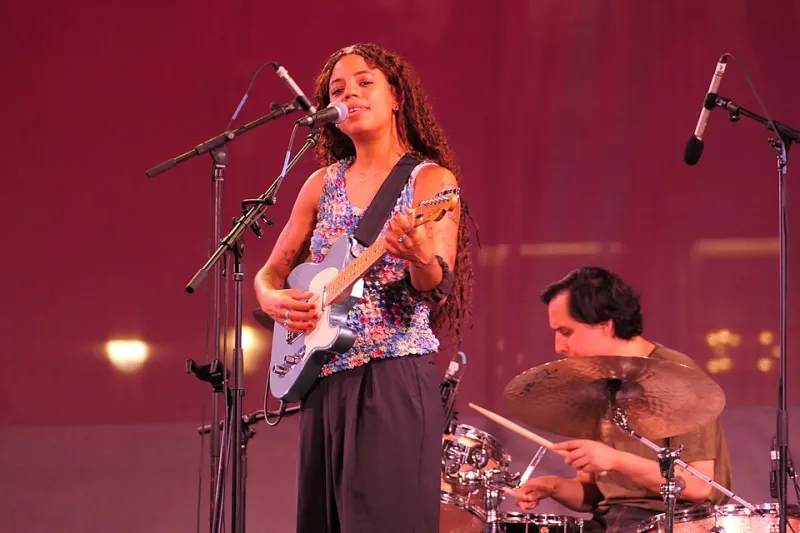
Photo: Alex Lozupone, CC BY 4.0, via Wikimedia Commons
For a long time, the dream looked like this: land on a Spotify editorial playlist, watch the streams climb, and let the algorithm do the rest. For most independent Vietnamese and Viet-American artists, that dream turned out to be a waiting room with no front desk. Nobody was coming to call their name.
So they stopped waiting.
Across the country — from Little Saigon in Orange County to Dorchester in Boston to the Vietnamese pockets of Houston and Atlanta — a growing number of independent artists are quietly building something the major streaming platforms were never designed to give them: direct, meaningful relationships with the people who actually listen to their music. And they're using data to do it.
The Playlist Problem Nobody Talks About
Streaming platforms are genuinely useful for discovery. That part is real. But for niche artists operating in a space that major algorithms don't naturally surface — Vietnamese-language music, bilingual indie pop, traditional-fusion genres — the math rarely works in their favor. The editorial teams at the big platforms aren't curating for diasporic Vietnamese communities in America. They're optimizing for scale.
What that means practically is that an artist releasing a heartfelt bài hát about their grandmother's village in Huế is competing for the same algorithmic attention as a pop single engineered by a team of producers with a six-figure promotional budget. The deck isn't just stacked — it's a different game entirely.
"I spent two years refreshing my Spotify for Artists dashboard like it was going to tell me something I didn't already know," says Linh T., a Vietnamese-American singer-songwriter based in San Jose who records under the name Linh Vân. "It told me how many streams I got. It didn't tell me who those people were, where they came from, or why they cared. I was flying completely blind."
That frustration is the origin story for a lot of what's happening now.
Building the List Before the Album
One of the most consistent shifts happening inside the Viet-American independent music scene is the emphasis on email — yes, actual email — as a foundational fan relationship tool. It sounds unglamorous. It's working.
Artists who've gone deep on direct-to-fan strategy describe email lists as the one channel they actually own. Social platforms change their algorithms. TikTok could theoretically disappear tomorrow. But an email list belongs to the artist, full stop.
Khoa Nguyễn, a producer and vocalist who runs a small independent music operation out of his apartment in Garden Grove, started building his list two years ago with a simple offer: sign up, get an unreleased demo. He now has over 3,000 subscribers and says his open rates consistently beat 40 percent — well above industry averages.
"When I drop something, I know at least 1,200 people are going to see it that day," he explains. "That's real. That's not a hope. And those people opted in — they're not random. They found me because something I made resonated with them."
He cross-references his email engagement data with Bandcamp analytics and YouTube Studio insights to build a surprisingly detailed picture of who his audience is, where they're located, which songs they return to, and which ones they skip. That information shapes everything from his release schedule to the way he prices his merchandise.
Discord, Patreon, and the Community-First Model
Beyond email, a younger cohort of Viet-American artists is building community infrastructure that turns passive listeners into active participants. Discord servers have become a particularly effective tool, especially for artists whose music sits at the intersection of Vietnamese identity and internet-native culture.
Mai P., who makes lo-fi and ambient music under a Vietnamese pseudonym and has a dedicated following among Vietnamese-American college students, runs a Discord server with over 800 members. It functions as part listening room, part cultural space — members share music, discuss Vietnamese-American experiences, and get early access to Mai's work in progress.
"The community kind of built itself," she says. "I just gave it a place to exist. Now those people are genuinely invested in what I do. They're not just listeners — they're like a team."
Patreon has also found a foothold in this space, particularly among artists who produce content beyond just music — think studio vlogs, language-learning content woven into music lessons, or behind-the-scenes cultural commentary. For Vietnamese-American artists who are also educators or storytellers, the model creates a sustainable income stream that doesn't depend on streaming royalties at all.
Reading the Room With Better Tools
The analytics landscape for independent artists has genuinely improved in the last few years. Tools like Chartmetric, Soundcharts, and even the native dashboards on platforms like DistroKid and TuneCore give artists more granular data than they had access to half a decade ago. The trick is knowing what to look for.
Several artists interviewed for this piece described a learning curve — not with the tools themselves, but with interpreting the data in ways that are actually useful. Knowing that a song got 10,000 streams in a given month is less interesting than knowing that 60 percent of those streams came from Vietnamese-American listeners in Southern California between the ages of 18 and 34 who also listen to a specific cluster of other artists.
That kind of audience intelligence — even approximated — lets an artist make smarter decisions about where to play live, which cities to target for promotion, and how to frame their story to media outlets and booking agents.
"Data doesn't replace instinct," says Linh Vân. "But it confirms it. I knew my people were out there. The numbers just helped me find them."
What This Means for the Scene
The broader implication of all this isn't just that individual artists are getting smarter about their careers. It's that the Vietnamese-American music ecosystem is slowly developing the kind of infrastructure that makes scenes sustainable over time.
When artists understand their audiences, they make better music for them. When they build direct relationships, they create the kind of loyalty that survives algorithm changes and platform pivots. When they share what they've learned with each other — and many of them are, through informal networks and community workshops — the whole scene gets more resilient.
None of this is a magic fix. Independent music is still hard. The economics are still brutal. But for Vietnamese and Viet-American artists who've spent years feeling invisible to the platforms that were supposed to help them, having a clear picture of who's actually listening — and a direct line to reach them — changes the whole equation.
The algorithm doesn't have to see you if your fans already do.