Heartbreak Has a Melody: Unpacking the Deep Emotional Code of Vietnamese Love Songs
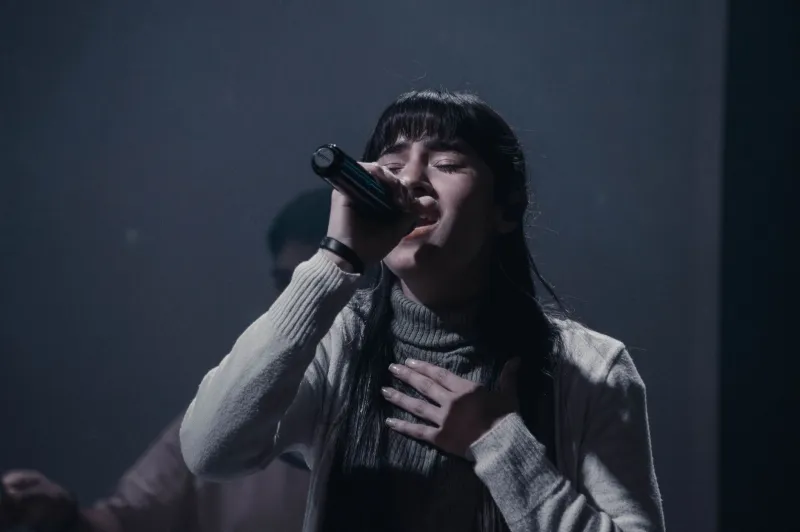
There's a moment — maybe you've had it — where a Vietnamese ballad comes on and you feel something shift. You might not even catch every lyric. But the melody does something to you. It pulls. It aches. It lingers like a memory you can't quite place.
That's not an accident. Vietnamese love songs are built to do exactly that.
Across streaming platforms like Spotify and Apple Music, Vietnamese-language ballads are quietly racking up millions of plays from listeners in cities like Houston, San Jose, and Garden Grove. A lot of those listeners are Vietnamese Americans who grew up hearing these songs in the background — at family gatherings, from a parent's car stereo, drifting out of a karaoke room down the hall. Now they're coming back to them on purpose, and they're bringing their friends along.
So what is it about these songs? What makes a Vietnamese heartbreak ballad hit so differently?
The Poetics of Longing
In Vietnamese musical tradition — especially in the genre known as nhạc vàng, or "golden music" — longing isn't just an emotion. It's practically a philosophy. The Vietnamese word nhớ (to miss, to long for) shows up in countless song titles and lyrics, and it carries a weight that's tough to translate directly into English. It's not just missing someone. It's a kind of ache that exists in the space between where you are and where your heart wants to be.
That emotional register is built into the structure of the songs themselves. Verses tend to build slowly, painting scenes with layered imagery — moonlit rivers, falling leaves, the smell of rain on a dirt road. Choruses don't explode so much as they open up, like a door swinging wide on a quiet night. The effect is cumulative. By the time you're three minutes in, you're not just hearing the song. You're inside it.
Recurring metaphors do a lot of the heavy lifting. Seasons — especially autumn — carry enormous symbolic weight, standing in for endings, for the passage of time, for love that didn't survive. Water appears constantly: rivers that separate lovers, rain that brings back memories, tears that mirror the sky. These images aren't clichés in the Vietnamese context. They're a shared visual language, one that listeners recognize and feel in their bones.
Why the Format Works
Classic Vietnamese ballads follow structures that feel almost cinematic. A lot of them are built around a narrative arc — a relationship that bloomed, a moment of separation, and then the long, quiet aftermath. The singer isn't just performing an emotion; they're telling a story, and the listener is invited to step into it.
This is partly why these songs translate so well across generations. You don't need to have lived the exact experience being described. The architecture of the song — the slow build, the aching melody, the imagery that feels universal even when it's deeply specific — creates space for the listener to bring their own grief, their own longing, their own story.
Contemporary Vietnamese American artists are leaning into this quality hard. Singers and songwriters who grew up between two cultures are finding that the ballad format gives them room to explore identity, displacement, and the particular kind of longing that comes from being caught between worlds. The themes of classic nhạc vàng — separation, distance, the love that time couldn't quite erase — map surprisingly well onto the immigrant experience.
Streaming Is Opening the Archive
For a long time, a lot of these songs lived mostly on old cassette tapes, dusty CDs in the back of Vietnamese grocery stores, or the memory of older family members. Streaming changed that. Platforms have made decades of Vietnamese music suddenly, effortlessly accessible — and younger listeners are doing a kind of cultural archaeology, digging through catalogs and discovering artists their parents and grandparents loved.
On NhacViet Live, we hear from listeners all the time who describe the experience as both personal and surprising. Someone will stumble onto a Khánh Ly recording or a Tuấn Ngọc ballad while scrolling late at night, and something just clicks. The song wasn't written for them, wasn't even written in their lifetime — but it feels like it was.
That's the power of a well-constructed love song. It doesn't belong to any single moment. It belongs to the feeling.
Modern Artists Keeping the Tradition Alive
A new wave of Vietnamese American artists is doing something genuinely interesting: they're taking the emotional DNA of traditional ballads and rewiring it for a contemporary audience. Think lush production layered over acoustic guitar, English phrases woven into Vietnamese verses, or trap-influenced beats beneath melodies that feel like they could have been written fifty years ago.
Artists like Hương Ly, Bùi Anh Tuấn, and a growing number of independent singer-songwriters based in the US are proving that the ballad format isn't stuck in the past. It's adaptive. It absorbs new sounds without losing what makes it work — that core commitment to emotional honesty, to the slow, patient unfolding of a feeling.
For Vietnamese Americans in their twenties and thirties, these modern takes serve as a kind of bridge. They're familiar enough to feel approachable, but rooted enough to feel real. And they're sparking conversations between generations — parents and kids trading playlists, grandparents hearing their favorite melodies reimagined, everyone finding something to connect over.
The Karaoke Dimension
You can't talk about Vietnamese love songs without talking about karaoke. In Vietnamese American communities across the US, karaoke isn't just a party activity — it's a ritual. And the songs people reach for when they step up to the mic are almost always ballads. Heartbreak songs. Longing songs.
There's something cathartic about singing a Vietnamese love song in a karaoke room surrounded by people who understand exactly what the words mean — or who feel the weight of them even if they don't. The communal experience of performing grief, of giving voice to longing in a room full of people who get it, is a huge part of why these songs endure.
On platforms built around Vietnamese entertainment and karaoke culture, these tracks consistently top the charts. They're not nostalgic curiosities. They're living, breathing parts of the community.
What They're Really Saying
At their core, Vietnamese love songs are about the gap between people. The distance between where you are and where the person you love is. The space between who you were and who you've become. The silence after something ends.
For Vietnamese Americans specifically, that gap takes on extra meaning. There's the literal distance from a homeland many have never seen. There's the cultural distance between generations. There's the emotional distance that comes from carrying a history too big to fully hold.
The ballads don't solve any of that. They don't pretend to. But they name it. They sit with it. And somehow, that's enough.
That's why these songs hit different. Not because they're sad — though they often are — but because they're honest. And in that honesty, they create something that feels, against all odds, like company.