Something Old, Something New, Something Remixed: Inside the Vietnamese Wedding Entertainment Boom
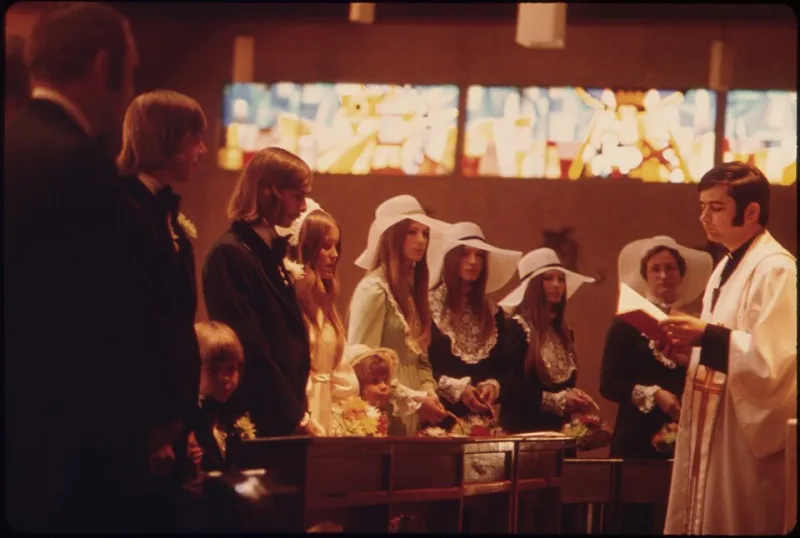
Photo: Art Hanson, Public domain, via Wikimedia Commons
Every spring and fall, something predictable happens across Vietnamese American communities from Garden Grove to Houston's Midtown to the suburbs of Northern Virginia: wedding season hits, and the phones of a very specific group of people start ringing nonstop.
These aren't caterers or florists. They're DJs, live performers, karaoke coordinators, and AV specialists who have quietly turned Vietnamese wedding entertainment into one of the most lucrative weekend gigs in the ethnic entertainment economy. And they're charging accordingly.
The Numbers Nobody's Talking About
Let's start with the money, because the money is genuinely surprising.
A well-connected Vietnamese American DJ working the Southern California market can clear $3,500 to $6,000 for a single Saturday wedding. A live band specializing in Vietnamese standards and pop crossovers? Anywhere from $8,000 to $15,000 for a full evening. Add in a karaoke coordinator — yes, that's a real job title now — and a dedicated AV crew, and a Vietnamese family planning a mid-sized reception can easily spend $20,000 or more just on the entertainment side of the budget.
And families are paying it.
"Vietnamese weddings are not small affairs," says DJ Hùng, who works under the name DJ HungViet and operates out of San Jose. "You're talking 300, 400, sometimes 600 guests. The family has been saving for this. They want it done right. They don't want to cut corners on the thing everyone's going to remember."
Hùng started doing weddings as a side gig in 2016 while working a day job in tech. By 2021, he had walked away from his salary entirely. Last year, he turned down more bookings than he accepted.
What Vietnamese Families Actually Want
Understanding the Vietnamese wedding entertainment market means understanding that the client expectations are layered and sometimes contradictory. Families want tradition — the classic bolero ballads, the emotional live performance of a song that means something to the grandparents — but they also want the younger guests entertained, which often means hip-hop, EDM, and Vietnamese-language pop that sounds nothing like anything from the 1970s.
Navigating that gap is the entire job.
"You have to read the room in real time," says Trang Lê, a live performer and emcee who has worked over 200 Vietnamese weddings across the East Coast. "The grandma table needs to feel respected. The cousins who flew in from Houston need to feel like they're at a party. Those are not the same thing. Your job is to make both happen."
Trang has developed what she calls her "bridge set" — a 20-minute sequence that transitions from traditional Vietnamese ballads into contemporary Vietnamese pop and then into an English-language banger, usually something crowd-proof like a Bruno Mars hit. She says the transition has to feel earned, not jarring.
"If you jump too fast, the older guests feel disrespected. If you stay slow too long, you lose the young crowd. It's a science."
The Rise of the Karaoke Coordinator
Perhaps no role in the Vietnamese wedding entertainment ecosystem has grown faster than the karaoke coordinator — a specialist whose entire job is managing the karaoke portion of a reception with the same professionalism that a wedding planner brings to the ceremony itself.
This isn't just someone plugging in a machine and handing out tambourines. Modern karaoke coordinators manage song queues, handle microphone logistics for rooms of 400 people, coach nervous singers before they go up, and sometimes act as backup performers when a scheduled guest singer cancels.
"Karaoke at a Vietnamese wedding is not optional," says coordinator Phúc Nguyễn, who works events in the Dallas-Fort Worth area. "It's the emotional centerpiece of the whole reception. When the uncle gets up and sings the song he sang at his own wedding 30 years ago, that's the moment people remember. My job is to protect that moment."
Phúc charges $1,200 to $2,500 per event depending on guest count and the technical complexity of the setup. He's booked solid every weekend from March through June and again from September through November.
Social Media Changed the Game Completely
Five years ago, Vietnamese wedding entertainers found work almost entirely through word of mouth — a cousin recommending a DJ, a family friend vouching for a band. That network still matters, but social media has completely transformed the marketing landscape.
Instagram reels of a perfectly executed live performance at a Vietnamese reception can generate hundreds of direct messages from families planning events across the country. TikTok clips of a DJ's seamless transition from a classic Khánh Ly track into a modern remix have gone viral in Vietnamese American communities, turning local entertainers into nationally recognized names.
"I got a booking from a family in Atlanta because their daughter saw my reel on Instagram," says DJ HungViet. "They flew me out. Paid for the hotel. That would never have happened without social media."
This visibility has also professionalized the market. Clients who can see exactly what they're getting — via highlight reels, testimonials, and behind-the-scenes content — are more willing to pay premium rates for proven performers. The era of the bargain-basement wedding DJ who showed up with a laptop and a Bluetooth speaker is fading fast.
The Younger Performers Are Changing the Sound
The most exciting shift in Vietnamese wedding entertainment right now is generational. A new cohort of performers in their mid-20s to early 30s is bringing production techniques, musical references, and cultural sensibilities that their predecessors simply didn't have access to.
These younger entertainers grew up consuming both Vietnamese classics and American pop, hip-hop, and EDM simultaneously. They're comfortable creating live mashups — weaving a Trịnh Công Sơn melody over a trap beat, or layering a 1980s Vietnamese pop hook into a house music set — in ways that feel genuinely fresh rather than gimmicky.
"The older generation of wedding entertainers treated Vietnamese music and American music as two separate things," says 28-year-old producer and performer Tommy Đặng, who works events in Orange County. "We grew up with both living in the same brain. So when we remix, it doesn't feel like a novelty. It just feels like how music sounds to us."
Families are responding. More couples — particularly those in their late 20s and 30s who are now entering prime wedding age — are specifically seeking out performers who can deliver this hybrid sound.
Building a Business, Not Just a Gig
The most successful Vietnamese wedding entertainers aren't just freelancers — they're running small businesses with real infrastructure. They have contracts, liability insurance, backup equipment, and in some cases, small teams of subcontractors they can deploy for simultaneous bookings.
The economics reward this kind of professionalism. A well-organized entertainment operation can gross $150,000 to $250,000 in a good wedding season without the overhead of a brick-and-mortar business.
For a community that has historically been pushed toward conventional professional paths, that kind of earning potential — built entirely around cultural entertainment — feels like its own kind of statement.
"My parents wanted me to be an engineer," Trang Lê says, smiling. "I make more than most engineers I know. And I get to sing at Vietnamese weddings for a living. I think they've come around."