Crate Digging in Little Saigon: The Vietnamese Americans Obsessed With Finding the Perfect Record
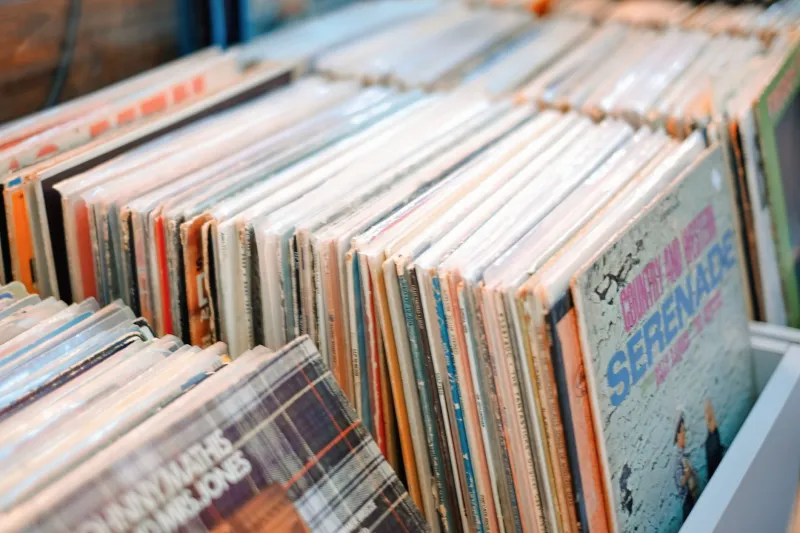
On a Saturday morning in Westminster, California, the kind of heat that makes the asphalt shimmer hasn't stopped a small crowd from gathering outside a narrow storefront wedged between a bánh mì shop and a nail supply wholesaler. Inside, stacked floor to ceiling in no particular order that an outsider could figure out, are hundreds — maybe thousands — of vinyl records. Some are in pristine sleeves. Others are wrapped in plastic so yellowed it's practically amber. A man in his late forties flips through a crate with the focused calm of someone who's done this a hundred times. He pulls one out, studies the label, and lets out a quiet "yes" under his breath.
He found what he came for: a pre-1975 pressing of a Khánh Ly album, recorded in Saigon before the world as his parents knew it changed forever.
This is Little Saigon's vinyl underground, and it's more alive than ever.
Why Physical? Why Now?
It might seem counterintuitive. Streaming is everywhere. You can pull up practically any Vietnamese artist — from classic bolero legends to the newest indie acts dropping on NhacViet Live — in under three seconds. So why are Vietnamese Americans lining up to spend real money on physical records that scratch, warp, and require actual equipment to play?
The short answer is that vinyl gives you something a playlist never can.
"When I hold a record my dad used to own, I'm holding his world," says Linh T., a 32-year-old graphic designer from Garden Grove who started collecting during the pandemic. "Spotify can't do that. There's no algorithm for that feeling."
For a lot of Vietnamese American collectors, the appeal is layered. There's the audiophile angle — the warmth of analog sound that digital compression strips away. There's the collector's thrill of the hunt. But underneath both of those runs something deeper: a need to preserve cultural memory in a form you can physically touch.
The Vietnamese diaspora in the US has always maintained a complicated relationship with cultural artifacts. So much was lost or left behind during the fall of Saigon in 1975. Photographs, documents, heirlooms — entire histories were abandoned in the rush to survive. A vinyl record that made it across the Pacific, or one that was somehow reissued and found its way into a Little Saigon shop decades later, carries a weight that no MP3 can replicate.
The Most Wanted: Artists and Albums Driving the Hunt
Ask any serious collector in the community what's at the top of their want list, and a few names come up again and again.
Khánh Ly is almost universally mentioned first. Her recordings from the late 1960s and early 1970s — particularly the collaborations with songwriter Trịnh Công Sơn — are the holy grail of Vietnamese vinyl collecting. Original pressings in good condition can fetch serious money, and even later reissues are snapped up fast.
Nam Lộc, Thanh Tuyền, and Chế Linh are also high on the list, especially for collectors whose parents grew up listening to them. These names carry the specific emotional frequency of a lost era — the golden age of Vietnamese pop before 1975.
But the hunt doesn't stop at pre-war Saigon recordings. The Paris By Night concert series, which began in the 1980s and became the defining entertainment franchise for the Vietnamese diaspora, produced a run of VHS tapes and, later, DVDs that collectors are now tracking down with equal enthusiasm. Some are even hunting for the rarer vinyl releases tied to the series.
Then there's the K-pop crossover angle — a genuinely fascinating wrinkle in this story. A younger generation of Vietnamese American collectors, many of them in their twenties, grew up consuming Korean pop music alongside Vietnamese music. For them, hunting rare K-pop pressings — limited-edition albums, photo card variants, regional releases — sits comfortably alongside searching for Vietnamese folk recordings. Both represent a version of Asian cultural identity that mainstream American record stores never really stocked.
"I've got a shelf that goes from Trịnh Công Sơn straight to BTS," laughs Mia N., a 24-year-old college student from San Jose. "My grandma thinks it's hilarious. But honestly, she gets it."
The Shops Keeping the Culture Alive
Little Saigon's record shops are doing more than moving product. They've quietly become community centers.
In Westminster and Garden Grove — the twin hearts of Southern California's Vietnamese American community — a handful of shops have managed to survive the streaming era by leaning hard into their identity as cultural anchors. They stock the stuff that no major chain would bother with: Vietnamese-language cassettes from the 1980s, bootleg concert recordings, imported pressings from Vietnam, and the occasional gem that someone's family donated after a relative passed.
The owners of these shops are often collectors themselves, deeply knowledgeable and genuinely passionate. They know their regulars by name and by taste. They'll set aside a record they know a customer has been hunting for, sometimes for months.
Social media has extended the reach of this community well beyond Southern California. Facebook groups and Reddit threads dedicated to Vietnamese vinyl collecting have members from Houston, San Jose, Northern Virginia, and beyond — all the major pockets of the Vietnamese American diaspora. Online marketplaces like Discogs have become essential tools, though collectors are quick to note that nothing beats showing up in person and flipping through the crates yourself.
More Than Nostalgia
It would be easy to frame this whole trend as pure nostalgia — older generations clinging to the past, younger ones playing at heritage tourism. But that reading misses the point.
For the second and third-generation Vietnamese Americans getting into vinyl right now, this isn't about recreating their parents' world. It's about building a bridge to it on their own terms. Buying a Khánh Ly record isn't passive preservation — it's an active choice to engage with a cultural lineage that American mainstream culture never made easy to access.
And the music itself holds up. Play a well-pressed Trịnh Công Sơn recording through a decent turntable and it sounds as emotionally alive as anything released last week. The songs aren't museum pieces. They breathe.
That's ultimately what's fueling the vinyl renaissance in Little Saigon: a generation of Vietnamese Americans who refuse to let their culture exist only in digital form, only on someone else's server, only accessible through someone else's algorithm. They want it in their hands. They want to feel the weight of it.
And they're willing to dig through a lot of crates to find it.