Two Tongues, One Song: The Art of Making Bilingual Music That Actually Hits
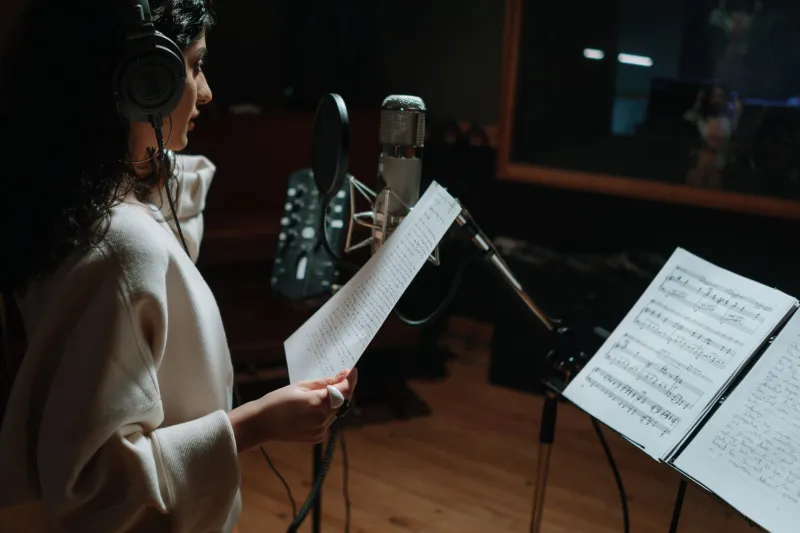
There's a moment that almost every Vietnamese American musician knows. You're mid-verse, pen hovering over a notebook, and you realize the word you need — the one that captures exactly what you're feeling — doesn't exist in the other language. Not really. You can translate it, sure, but something evaporates in the process. The emotional weight shifts. The rhythm breaks.
For a new generation of Viet-American artists writing songs in both English and Vietnamese, that moment isn't a dead end. It's the whole creative challenge — and increasingly, it's becoming their biggest artistic strength.
Why Bilingual Isn't Just a Gimmick
Let's be honest: bilingual songs have a reputation problem. Done wrong, they feel like a marketing move — a cynical attempt to grab two audiences at once without fully committing to either. Listeners can feel that inauthenticity immediately, and it kills the song before the chorus even lands.
But the artists actually cracking this formula aren't thinking about market segmentation. They're processing something real. Many grew up toggling between languages at the dinner table, in the classroom, on the phone with relatives overseas. The code-switching isn't performative — it's how their inner lives actually work.
That lived experience is what separates a bilingual song that resonates from one that falls flat. When the language shift happens at a moment of genuine emotional transition — when English carries the outer world and Vietnamese carries the private one — listeners feel it, even if they only understand half the words.
The Tonal Problem Nobody Talks About
Here's something non-Vietnamese speakers rarely consider: Vietnamese is a tonal language. Every syllable carries one of six tones that change the meaning entirely. That means a lyric that sounds emotionally right in English might, when rendered in Vietnamese, accidentally say something absurd — or worse, offensive.
Artists navigating this aren't just translating. They're essentially rewriting the song from scratch in a second language, matching meaning, tone, rhythm, and emotional register all at once, while also making sure the Vietnamese syllables land on the right beats without clashing with the melody.
It's compositional gymnastics, and the artists who do it well have usually spent years building that instinct. Some describe it as learning to hear both languages simultaneously — not translating in real time, but feeling where each language wants to go naturally within the musical structure.
Split Audiences, Unified Feeling
One of the trickiest things about writing for a bilingual audience is that you're often writing for people who will have completely different entry points into the same song. A Vietnamese-speaking grandmother in Garden Grove might latch onto a single phrase that hits her in the chest. Her American-born grandkid might not understand that phrase at all — but they feel the shift in the singer's voice when it arrives.
That emotional transfer across the language gap is what the best bilingual songs achieve. The goal isn't for everyone to understand every word. It's for everyone to understand the feeling.
Artists working in this space talk a lot about trust — trusting that a listener who doesn't speak Vietnamese will still be moved by the sonic texture of the language, the way certain vowels stretch out, the way tones rise and fall like a second melody underneath the main one. Vietnamese is, by its nature, a musical language. That's not a disadvantage in a song. It's a feature.
Where English Goes and Where Vietnamese Lives
If you listen closely to the bilingual hits that have connected with Viet-American audiences on streaming platforms, a pattern starts to emerge. English tends to show up in the verses — the narrative, the setting, the outer story. Vietnamese tends to arrive at the emotional core: the chorus, the bridge, the moment of release.
That's not a coincidence. For artists who grew up in Vietnamese households but lived their public lives in English, there's an emotional geography to each language. English is the language of school, work, and the world outside the front door. Vietnamese is the language of the kitchen, of phone calls to relatives, of arguments and apologies that could only happen in the mother tongue.
When a song mirrors that geography — when it moves from English into Vietnamese the way a person moves from composure into vulnerability — it lands with a specificity that purely English or purely Vietnamese songs can't replicate.
The Commercial Tightrope
None of this exists in a vacuum. Artists writing bilingual music are also trying to build careers, get on playlists, and reach audiences beyond the Vietnamese American community. That creates real tension.
Streaming algorithms don't always know what to do with bilingual content. A song that blends English and Vietnamese might get tagged inconsistently, surface in different genre buckets depending on the platform, or get passed over by curators who aren't sure where it belongs.
But some artists are finding ways to make that ambiguity work in their favor. The same song that connects deeply with first and second-generation Vietnamese Americans can also land with broader Asian American audiences navigating similar identity questions. It can resonate with anyone who has ever felt caught between two worlds — which, in the US, is a lot of people.
The key, according to artists who've found crossover traction, is specificity. A song that tries to be universally relatable often ends up being universally forgettable. A song that leans hard into the particular details of Vietnamese American life — the specific textures, references, and emotional registers — paradoxically reaches further because it feels more real.
What Comes Next
The infrastructure for this music is growing. Vietnamese American music platforms, streaming channels, and community radio shows are increasingly giving bilingual artists a home and an audience that's ready for them. Karaoke catalogs are expanding to include newer bilingual tracks alongside the classics, which matters more than it sounds — karaoke is where Vietnamese American communities actually bond with songs, where a track moves from something you stream to something you perform and share.
For the artists in the middle of this moment, the challenge hasn't gotten easier. Two languages still means twice the work, twice the chances to get it wrong, twice the self-doubt in the studio at midnight. But it also means twice the ways to reach someone. Twice the emotional vocabulary. Twice the chance to make something that hits different.
And when it works — when the Vietnamese verse drops in exactly the right moment and the room goes quiet — there's nothing else quite like it.