Drop the Needle, Drop the Beat: How Viet-American DJs Are Turning Grandma's Cassettes Into Club Gold
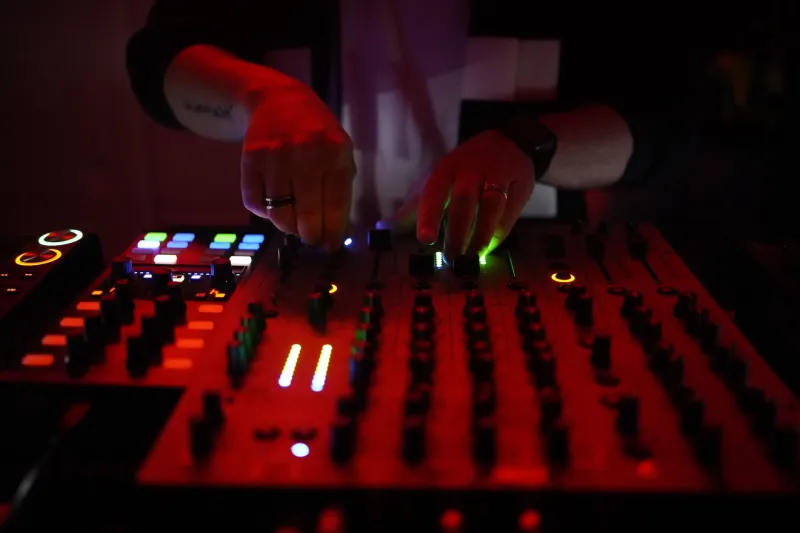
Somewhere between a stack of dusty cassette tapes in a San Jose garage and a packed dance floor in downtown Houston, a new kind of Vietnamese-American music is being born. It doesn't have an official genre name yet. It doesn't need one. You just feel it — that moment when a familiar melody from your childhood floats up through a wall of synths and sub-bass, and suddenly the club feels like home.
This is the world of the diaspora DJ: Vietnamese-American producers and electronic artists who are treating their cultural inheritance not like a museum exhibit, but like raw material. They're chopping it, pitching it, looping it, and sending it straight to the dance floor.
The Crates Their Parents Left Behind
For a lot of these artists, the journey started with curiosity — and sometimes a little bit of guilt. Growing up in cities like Orange County, Houston, or the Bay Area, many Viet-American kids tuned out the music their parents played at home. The bolero ballads, the cải lương recordings, the pre-1975 Saigon pop — it felt like it belonged to another world.
But somewhere in their twenties, something shifted. Maybe it was a late-night conversation with a parent. Maybe it was stumbling onto a YouTube rabbit hole of vintage Vietnamese recordings. Whatever the trigger, a growing number of producers started listening differently — not as children tolerating their parents' taste, but as musicians hearing raw sonic potential.
"I remember my mom had this one cassette she played every Sunday morning," says one Los Angeles-based producer who goes by the name Mây Điện. "I used to kind of hate it. Then one day I was working on a track and I hummed that melody without even thinking about it. That's when I knew I had to go back and actually listen."
What he found when he went back wasn't just nostalgia. It was texture — the warm tape hiss of old recordings, the microtonal bends of traditional instruments like the đàn bầu and đàn tranh, the ornate vocal runs of classic Saigon singers. For a producer trained on sampling culture and electronic music, it was a goldmine.
Sampling as a Cultural Act
Sampling has always been about borrowing power from the past. Hip-hop built an entire art form around it. But when Vietnamese-American producers sample their own cultural catalog, something extra is happening. It's not just a musical choice — it's a conversation with identity.
There's a producer collective out of the Bay Area quietly building a reputation for exactly this kind of work. Their sets blend traditional đàn tranh plucks with deep house grooves, layer cải lương vocal phrases over hypnotic techno patterns, and occasionally drop a full vintage Vietnamese ballad hook right in the middle of a peak-hour moment. The reaction from Vietnamese-American crowds? Immediate and emotional.
"People lose it," one of the collective's members explains. "Not just because it sounds cool. It's because they recognize something. Their parents' music showing up in a space that's supposed to be theirs — that hits different."
The technical side of this work is no small feat. Many vintage Vietnamese recordings are low-fidelity by modern standards, requiring significant audio restoration before they're usable in a club context. Producers talk about spending hours cleaning up old reel-to-reel transfers, isolating individual instrument tracks where possible, and carefully pitching samples so they lock into modern harmonic frameworks without losing their original character.
Building a Bridge Without Burning Either End
One of the trickiest parts of this work is respect — specifically, figuring out how to honor source material that carries real cultural and emotional weight for an entire community, without turning it into a gimmick.
The producers doing this work are keenly aware of that line. Many of them actively involve older Vietnamese musicians in their projects, either as collaborators or consultants. Some have reached out directly to families of classic artists to get clearance before using samples — not always legally required, but considered the right thing to do within the community.
"These aren't just sounds to me," says a Houston-based DJ who has been incorporating traditional Vietnamese folk music into her electronic sets for the past three years. "They're people's memories. They're my grandmother's memories. I want to use them in a way that adds to their story, not just exploit them for a cool effect."
That ethos shows up in how she structures her sets. Rather than burying the Vietnamese elements under layers of production, she often lets them breathe — a full verse of a classic song playing out before the beat drops, giving the audience a moment to actually hear and recognize what's being honored.
Where It's Landing
This sound is starting to find its audience in some interesting places. Vietnamese-American community events and Tết celebrations have always had a music component, but increasingly, organizers are booking electronic acts alongside traditional performers — a sign that the cultural gatekeepers are warming up to the fusion.
At the same time, these producers are crossing over into broader electronic music spaces. Club nights in LA, Houston, and the Bay Area have started featuring Viet-American DJs not as novelty acts but as legitimate headliners. Online, their mixes are circulating through Vietnamese diaspora communities across the country and picking up listeners who have no Vietnamese connection at all — people who are just drawn to the sound.
Streaming platforms are also starting to catch up. Playlists tagged with labels like "Vietnamese electronic" or "Viet future beats" are gaining traction, and a handful of independent releases blending traditional Vietnamese sounds with contemporary production have racked up streaming numbers that would have seemed impossible a few years ago.
The Conversation Continues
What's most compelling about this movement isn't any single track or artist — it's the conversation it's opening up within Vietnamese-American communities. When a 25-year-old hears their parents' music in a new context, it creates an opening. Suddenly there are questions: What is this song? Who recorded it? What does the Vietnamese mean? Where did our family come from before they came here?
Music has always been one of the most effective ways to transmit culture across generations, and the diaspora DJs are figuring out how to make that transmission feel urgent and alive rather than obligatory. They're not asking younger Vietnamese Americans to sit down and respectfully appreciate their heritage. They're inviting them to dance to it.
And honestly? That might be the most Vietnamese thing of all — taking something old, finding the joy in it, and making sure it doesn't get left behind.
Keep up with the artists pushing Vietnamese music into new territory right here on NhacViet Live, where the tradition never stops moving.